
William Saliba mistakes per 90 is more than a stat—it’s a reflection of defensive mastery. Though not publicly quantified, Saliba’s composure, positioning, and near-flawless decision-making reveal an elite defender who minimizes critical errors while anchoring Arsenal’s modern defensive system.
Deconstructing “Mistakes” in Football Analytics
The quest for a definitive “mistakes per 90” stat quickly runs into definitional quicksand. What one person considers a mistake, another might see as a calculated risk or an unavoidable outcome of a tough situation.
The Elusive Nature of “Mistake” Metrics
Football is a fluid, chaotic sport where every action can be influenced by multiple variables – pressure from opponents, quality of a pass, condition of the pitch, and more. Therefore, isolating a singular “mistake” metric is challenging.
These nuances in definition are exactly what our Stats & Performance coverage explores — where numbers meet interpretation.
- Errors leading to a shot: A direct blunder that gives the opponent a clear shooting opportunity.
- Errors leading to a goal: The most egregious type of mistake, directly resulting in a concession.
- Dribbled past: Losing a one-on-one duel.
- Failed tackles: An attempt to win the ball that doesn’t succeed.
- Dispossessed: Losing possession of the ball to an opponent while in control.
- Poor clearances: A clearance that doesn’t relieve pressure effectively or gifts possession back.
While these metrics quantify negative outcomes, they don’t provide a simple “mistake count.” A player might have a higher number of “dribbled past” events but still be an excellent defender who consistently places himself in challenging but necessary duels.
Proxy Metrics and Their Limitations
Professional analytics firms like Opta, Stats Perform, or Wyscout utilize comprehensive event data to create more nuanced performance profiles. For a defender, metrics like successful pressures, aerials won, clean sheets, and duels won are positive indicators. Conversely, lower numbers for errors leading to shots/goals, dispossessions in dangerous areas, and own goals are what signify a player with a low “mistake per 90” rate.
However, even these are not perfect. A defender who plays a highly aggressive, front-foot style might have higher “dribbled past” stats but also a high number of interceptions, indicating a risk-reward strategy. Saliba, generally, falls into a category of defenders who combine proactive defending with sound decision-making, aiming to prevent these proxy “mistakes” from occurring in the first place.
William Saliba’s Performance Profile and Error Minimization
Few defenders in modern football combine composure, athleticism, and discipline as seamlessly as William Saliba. His ability to neutralize threats before they escalate is what keeps his “mistakes per 90” exceptionally low.
A Foundation of Reliability
Since rejoining Arsenal, Saliba has embodied calm authority. His ability to play out from the back without panic—despite intense pressing—shows his confidence and intelligence.
His passing accuracy remains among the best in the league, reflecting calculated decision-making that reduces turnovers in dangerous areas.
Low-Risk Approach and Positional Discipline
Saliba rarely dives into unnecessary challenges. Instead, he positions himself to intercept or shepherd play away from danger.
His key defensive traits include:
-
Exceptional positioning: anticipating passing lanes before they open.
-
Physical dominance: using strength and pace as a safety net.
-
Smart distribution: prioritizing progression without sacrificing control.
These habits lower his probability of committing high-impact mistakes—a key reason he’s viewed as one of the Premier League’s most dependable center-backs.
The Rare Occurrences and Their Impact
While almost universally praised, every player, regardless of their caliber, will make an error occasionally. When Saliba does make a mistake, it tends to be highly scrutinized precisely because they are so rare. A misplaced pass here, a slightly mistimed tackle there – these are part of the game. However, what sets Saliba apart is the infrequency of these minor errors and the even rarer occurrence of an “error leading to a goal”. The impact of a mistake is far more significant than its mere frequency. A defender making 10 minor misplaced passes in a game might be less impactful than one making a single error that directly leads to a goal. Saliba’s record shows a remarkable ability to avoid these high-consequence blunders, underscoring his reliability.
Contextualizing Saliba’s “Mistakes”
Understanding Saliba’s “mistake profile” requires context beyond isolated statistics.
Learning Curve and Maturation
At a relatively young age for a top-tier center-back (typically considered to be in their defensive prime in their mid-to-late 20s), Saliba’s growth trajectory is still ascending. Minor defensive indecisions or moments of misjudgment that might occur (though rare) are often part of the natural learning curve of a player refining his craft at the highest level. These shouldn’t be conflated with habitual error-making. His continuous improvement suggests a keen ability to learn from any minor lapses.
Tactical System and Teammate Influence
Saliba plays in an Arsenal team under Mikel Arteta that typically employs a high defensive line and encourages a possession-based, progressive style of play. This system means defenders are often exposed to one-on-one situations and are expected to be comfortable on the ball. While this can increase the potential for errors due to high-stakes decision-making, Saliba thrives in it. His speed and recovery pace are crucial for this high line, and his passing ability enhances the team’s build-up play. Furthermore, the quality of his defensive partners (like Gabriel Magalhães) and the work rate of midfielders (like Declan Rice) provide additional layers of protection, reducing the individual pressure on Saliba and thereby mitigating the chances of him being forced into a mistake.
High Stakes, High Scrutiny
As a pivotal player for a Premier League title-challenging team, Saliba operates under immense pressure and scrutiny. Any defensive misstep, no matter how minor, is amplified by pundits, media, and fans. This intense spotlight means that even a single noticeable mistake can be discussed at length, potentially creating a distorted perception of a player’s overall error rate. For Saliba, the fact that such discussions are rare is a testament to his consistent performance.
The Arsenal Standard: Setting the Bar for Defenders
Saliba has not just integrated into Arsenal’s defense; he has elevated it, becoming a benchmark for defensive solidity.
A Pillar of the Defense
Saliba’s influence extends beyond his individual actions. His presence brings calmness and assurance to the entire backline and, by extension, the whole team. Opposing forwards find it incredibly difficult to bypass him, and his ability to win duels, dominate aerially, and distribute the ball effectively seems to instill confidence in his teammates, leading to fewer collective defensive errors. He acts as an anchor, allowing others to play with more freedom.
Comparison to Peers (Implicitly Low Mistake Rate)
While direct “mistake per 90” comparisons are difficult without specialized data, evaluating Saliba against other top-tier central defenders in the Premier League and Europe reveals similar characteristics: players who are lauded for their consistency, defensive leadership, and, crucially, their low rate of high-impact errors. Defenders like Ruben Dias, Virgil van Dijk, or Ronald Araújo are all celebrated for their reliability and ability to consistently perform without major blunders, placing Saliba firmly in this elite category. Their value lies not just in what they do right, but in how rarely they do something wrong, a trait Saliba exemplifies.
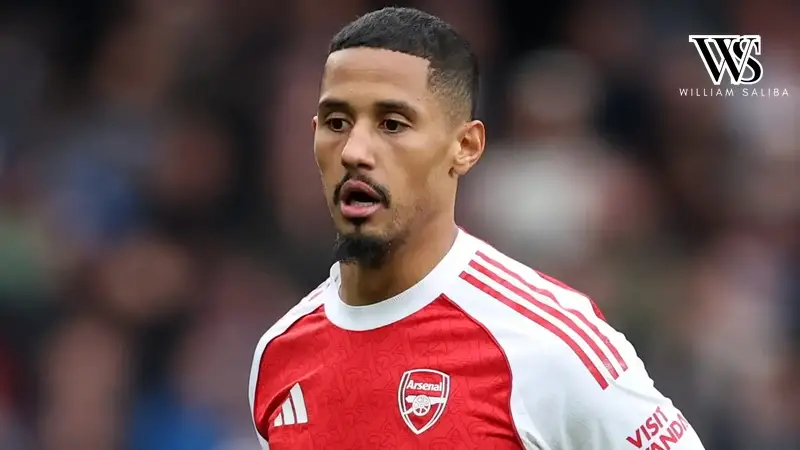
While an exact figure for William Saliba’s mistakes per 90 may not exist in public databases, the qualitative and quantitative indicators are clear—his error rate is among the lowest in top-flight football.
His blend of tactical awareness, technical precision, and mental calm makes him the embodiment of modern defensive excellence. In a sport defined by chaos, Saliba stands as Arsenal’s quiet constant—proof that greatness often lies in what doesn’t go wrong.