
William Saliba defensive errors are rare but revealing. As one of Arsenal’s most composed defenders, his few lapses provide deep insight into the pressures of elite defending. This analysis explores how such moments occur, what they reveal about top-tier football, and how Saliba’s response defines his evolution as a world-class centre-back.
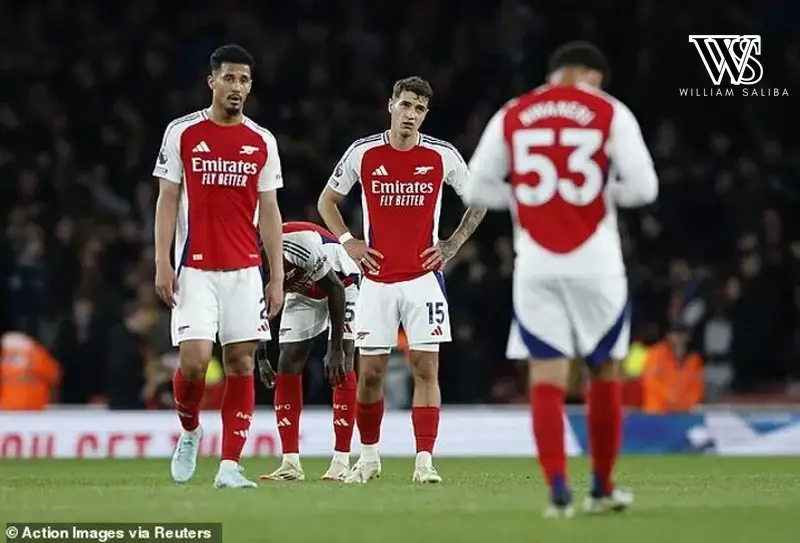
Understanding the Nature of Saliba’s Defensive Stumbles
While Saliba’s calm authority and impeccable positioning have made him a cornerstone of Arsenal’s backline, even he is not immune to the fine margins that define defending at the top level. To truly appreciate his growth, it’s worth dissecting these rare moments — not as blemishes, but as valuable lessons in adaptability, composure, and decision-making under pressure.
Moments of Overconfidence or Slight Misjudgment
Before diving into individual instances, it’s important to understand that even the best defenders occasionally gamble on anticipation. Saliba’s lapses often stem from milliseconds of overconfidence rather than technical flaws.
A common scenario is when Saliba steps slightly ahead of the defensive line to press an opponent too early. A quick switch of play leaves space behind, forcing him to recover. Like a chess player who overextends a move, the issue lies in a bold but miscalculated decision — not a lack of skill.
Such moments highlight the razor-thin balance between proactive and reactive defending. Saliba’s willingness to step forward is what makes him dominant, but every calculated risk carries the potential for exposure when timing falters.
These fine margins are the type of performance details explored throughout Stats & Performance.
The Unpredictability of Elite Forwards
Transitioning from anticipation to reaction, defenders often face forwards whose brilliance makes prediction nearly impossible. Here lies one of the most difficult realities of defending: even flawless positioning can be undone by pure offensive genius.
Against players like Vinícius Júnior or Kylian Mbappé, Saliba’s precision is tested to the extreme. A sudden burst of acceleration or a feint inside the box can turn a solid defensive stance into a desperate chase. These moments aren’t failures—they’re reminders that elite-level defense is as much about adaptation as perfection.
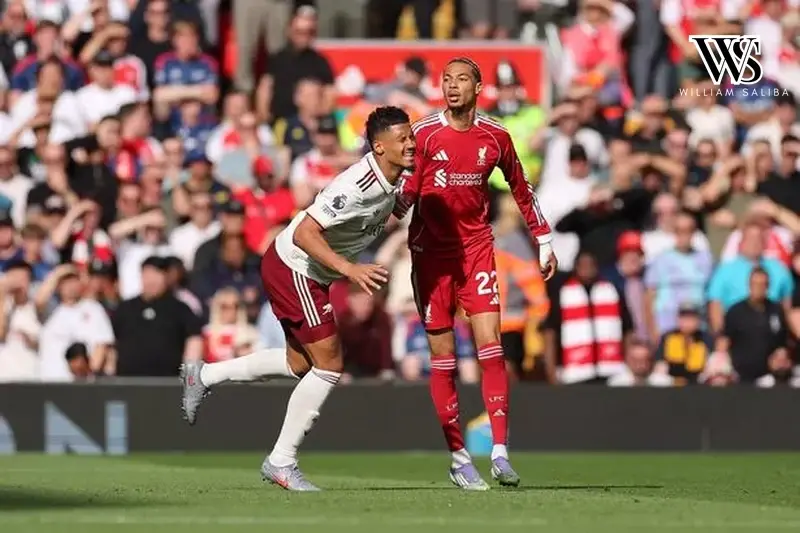
Tactical Context: The Perils of Arsenal’s High Defensive Line
Understanding Saliba’s role within Arsenal’s system is crucial before assigning blame to individual moments. Under Mikel Arteta, Arsenal often push their defensive line high to maintain territorial dominance and compress midfield space.
While effective, this tactical setup naturally increases vulnerability to direct balls over the top. Even a perfectly timed pass to a quick striker can put Saliba in a one-on-one race, despite his exceptional recovery speed. It’s a systemic risk rather than a personal flaw—an inevitable trade-off of modern high-press football.
When Arsenal’s midfield line is caught too high, these long balls expose defenders to isolated duels. Saliba’s task is not to avoid them entirely but to manage them intelligently, reading trajectories before danger fully materializes.
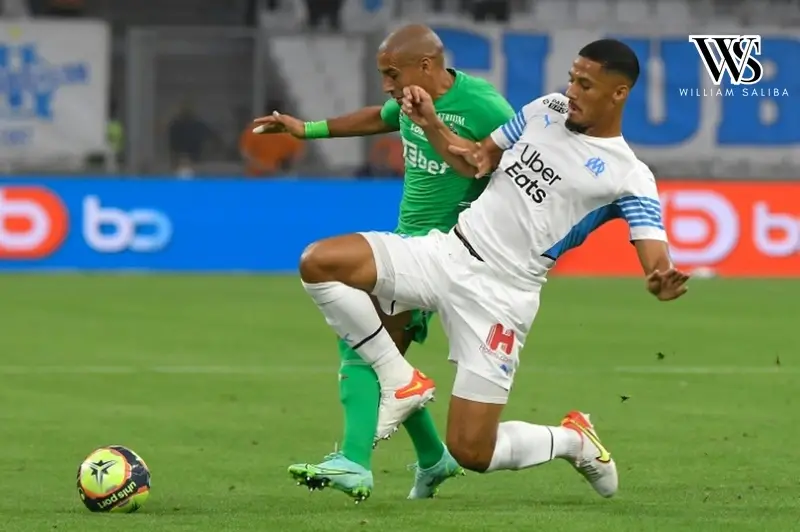
Lessons Derived from Saliba’s Defensive Lapses
These occasional errors, when analyzed with nuance, illustrate not weakness but evolution. They reveal how elite defenders refine their instincts and sharpen their awareness with each challenge faced.
The Importance of Constant Vigilance and Communication
From tactical awareness to mental sharpness, defending demands perpetual concentration. For Saliba, these moments reaffirm that no play is ever truly “safe.”
A brief lapse in coordination or communication can dismantle an otherwise perfect defensive shape. Arsenal’s success relies heavily on defenders staying synchronized—maintaining vocal contact, reading each other’s body language, and anticipating transitions as a unit.
Much like a symphony where every note depends on timing and harmony, a defensive line thrives only when every member reacts as one.
The Nuances of Risk Management in Defense
Moving from teamwork to individual choice, Saliba’s decision-making process lies at the heart of his evolution. Elite defenders walk a constant tightrope between aggression and restraint.
When to press, when to delay, when to step up — each decision carries implications. A well-timed tackle can snuff out danger, but a mistimed one can open gaps. Saliba’s development lies in mastering this probability calculus, fine-tuning when to engage and when to hold shape.
This dynamic is not unlike diplomacy: sometimes the smartest move is restraint, ensuring stability over spectacle.
The Psychological Fortitude Required
Even more telling than the physical is the mental response. Every defender, regardless of stature, will err; greatness lies in the aftermath.
When Saliba concedes a penalty or misjudges a clearance, what stands out is his rapid recovery. Rather than allowing an error to spiral into hesitation, he compartmentalizes it, resets, and performs stronger.
This resilience—mental elasticity in the face of scrutiny—is what separates elite defenders from good ones. Like a boxer who rises after being knocked down, Saliba’s ability to recover defines his defensive maturity more than perfection ever could.
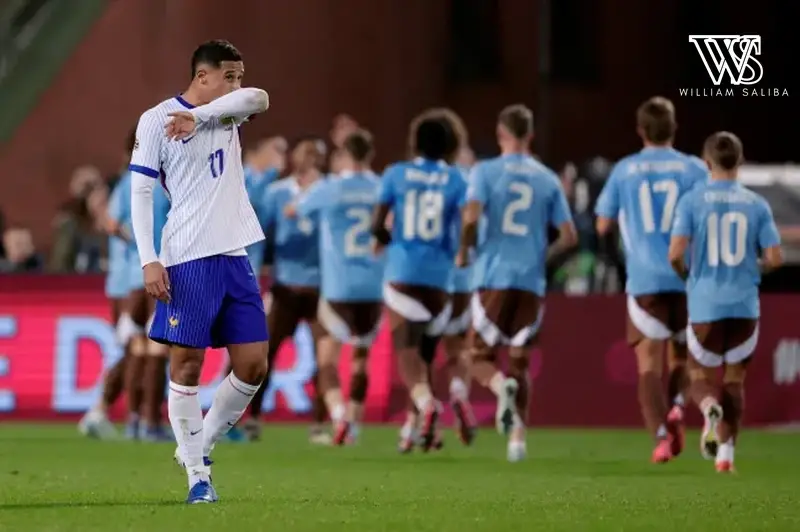
To study William Saliba’s defensive errors is to appreciate the essence of modern defending—where perfection is an ideal, not a constant. His rare lapses are not cracks in his foundation but brushstrokes in his evolution, shaping him into a more complete, self-aware defender.
As Arsenal continue to chase domestic and European success, these moments of imperfection may, paradoxically, be what turn Saliba into one of the most complete center-backs of his generation.